Some people enter your life with a strange sense of recognition. You may feel drawn to them at once, or notice that meeting them changes your plans. Vertex conjunct ascendant synastry is an astrology contact often tied to those fated-feeling encounters.
Astrology can offer a useful story about attraction and timing. Still, it can’t prove a relationship must last. The full chart, your choices, and the way you treat each other matter most.
Vertex conjunct Ascendant can make a meeting feel personal, timely, and hard to forget.
The Vertex person often feels pulled toward the Ascendant person’s presence and style.
A close orb, accurate birth times, and other chart contacts shape the strength of this aspect.
Intensity is not proof of compatibility, commitment, or emotional safety.
What Vertex Conjunct Ascendant Synastry Means
The Vertex is a sensitive mathematical point in a birth chart, not a planet. Many astrologers connect it with meetings and events that feel outside your usual plans. The Ascendant, also called the rising sign, describes your first impression, outward style, and approach to life.
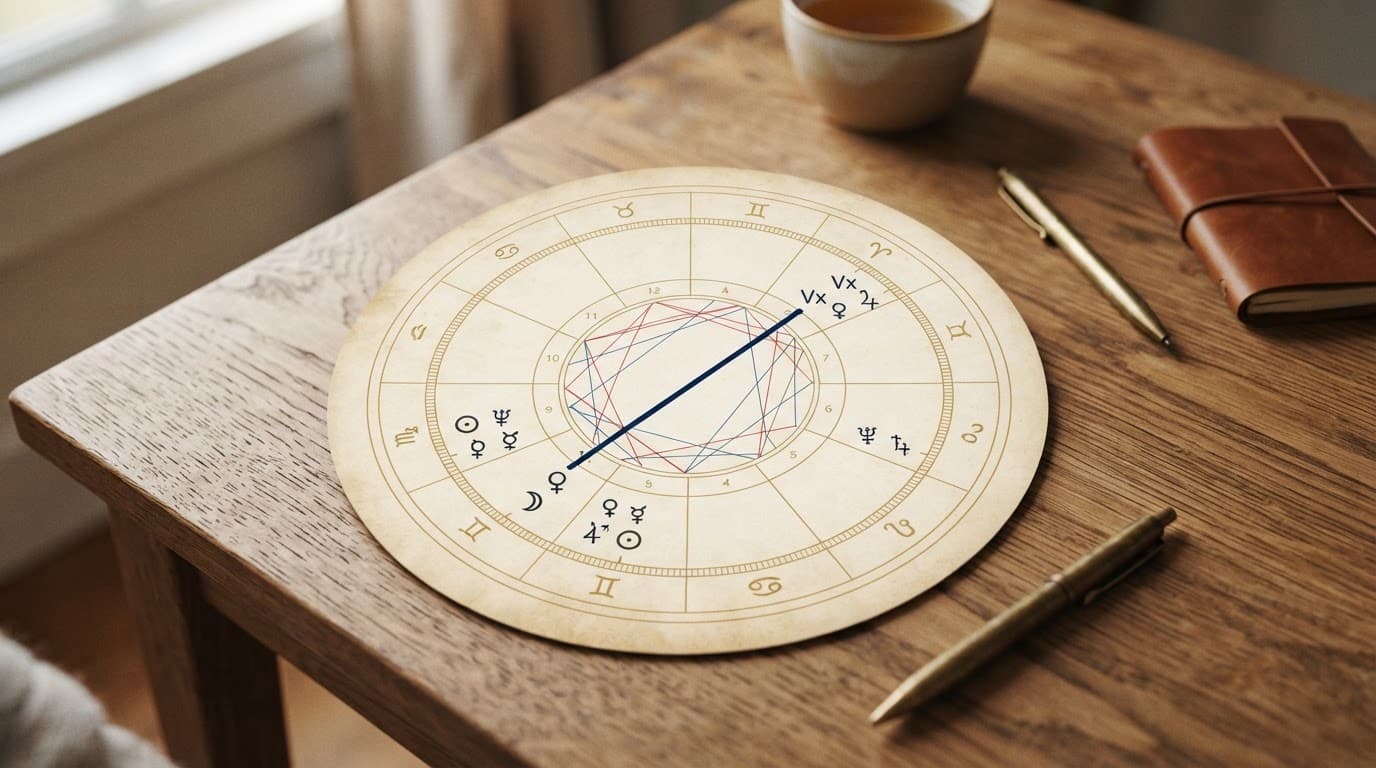
In vertex conjunct ascendant synastry, one person’s Vertex sits near the other person’s Ascendant. This can make the connection feel immediate because the Ascendant person brings visible, direct energy to the Vertex person’s life. A Vertex compatibility interpretation describes why astrologers often link this contact with meaningful timing.
Interpretations come from astrological tradition, not scientific proof. Different astrologers also give the Vertex different weight.
### Why the First Meeting Can Feel Instant and Magnetic
This aspect often brings curiosity, attraction, or a sense that the meeting matters. The Vertex person may feel affected by the Ascendant person’s face, energy, confidence, or way of moving through a room.
Meanwhile, the Ascendant person can act as a catalyst. They may push the Vertex person toward a choice or a new chapter. That does not make the bond a guaranteed soulmate match or a marriage promise.
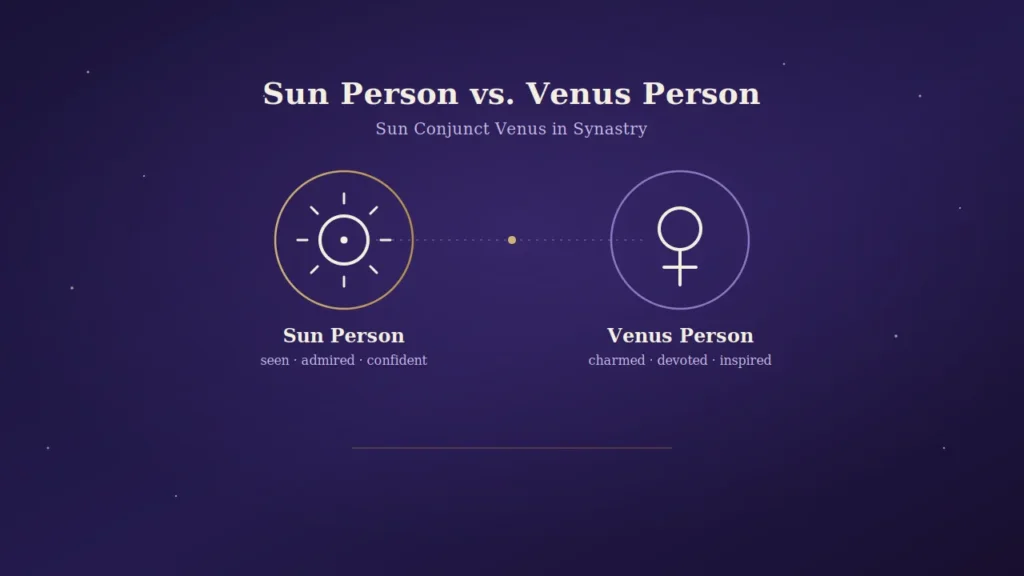
The Vertex Person and Ascendant Person in Synastry
The two people may feel the contact in different ways. The Vertex person often feels pulled toward the relationship or struck by its timing. The Ascendant person may feel unusually noticed, influential, or able to bring out a strong response.
This contact can show up in romance, friendship, family ties, work partnerships, and mentor relationships. The setting changes, but the feeling of personal impact can remain.
How Vertex Conjunct Ascendant Synastry Can Shape a Relationship
Attraction, Growth, and Life Changes
A powerful beginning can lead to real change. The Ascendant person may help the Vertex person show up more boldly or question an old identity. Sometimes the connection arrives before a move, career change, public step forward, or major shift in self-image.
Even a short relationship can leave a mark. Its value may lie in what it starts, rather than how long it lasts.
The Shadow Side of a Powerful Connection
Intensity can blur judgment. Someone may idealize the other person, rush intimacy, excuse poor behavior, or assume fate will fix clear problems.
A chart contact can describe a strong pull, but it cannot turn disrespect, secrecy, or inconsistency into a healthy bond.
Projection and unmet needs can also create a powerful feeling. Judge the relationship by steady behavior, consent, respect, and emotional safety.
What Makes the Aspect Stronger or Weaker
Astrologers usually give a tight conjunction the most weight. Many use an orb of about 2 degrees, while others consider 3 to 5 degrees. A wider orb may still matter, but it often needs support from other contacts.
Check the sign, house placement, and links to the Sun, Moon, Venus, Mars, Saturn, and lunar Nodes. A discussion of Vertex relationship experiences also shows why people should avoid reading any one aspect in isolation.
How to Read Vertex and Ascendant Synastry in the Full Chart
Accurate birth times matter because the Ascendant and Vertex can change quickly as the chart moves through the day. Start with both birth charts, then compare the exact degrees of the Vertex and Ascendant.
A synastry chart calculator can help you place both charts side by side. Treat the result as a starting point for reflection, not a verdict about your future.
Check the Sign, House, and Supporting Aspects
The sign describes the style of the connection. The house shows where its effect may appear, such as home life, work, friendship, or partnership.
Next, look for contacts to the Sun, Moon, Venus, Mars, Saturn, and Nodes. Supportive aspects may make closeness easier. Hard aspects can bring pressure, conflict, or lessons that require maturity.
Do Not Confuse Fate With Long-Term Compatibility
A meaningful encounter and a workable relationship are different things. Compare communication habits, emotional needs, commitment goals, conflict patterns, and real-life limits.
Composite charts and transits can add timing context. However, direct conversation gives you better information about trust, boundaries, and shared plans.
Frequently Asked Questions
Does Vertex conjunct Ascendant mean you are soulmates?
Astrologers may call this a fated or karmic contact. It does not prove a soulmate bond or guarantee a lasting relationship. The full synastry chart and daily treatment matter far more than one aspect.
Which person feels Vertex conjunct Ascendant more strongly?
The Vertex person often feels the meeting has unusual weight or timing. The Ascendant person expresses the visible energy that triggers that response. Both people may feel it strongly when other chart links repeat the theme.
Can this aspect indicate marriage?
This contact can describe a significant relationship, but it is not a stand-alone marriage indicator. Look at Saturn contacts, the seventh house, Venus, the Moon, and each person’s real commitment goals.
What if the conjunction has a wide orb?
A wide orb may feel less obvious, especially without supporting aspects. Give more weight to a tight conjunction and reliable birth times. Small timing errors can change chart angles and house placements.
Final Thoughts
Vertex conjunct ascendant synastry often describes a meeting that feels magnetic, well-timed, and personal. The Vertex points to impact and turning points, while the Ascendant shows the person who brings that energy into view.
Enjoy the sense of connection, but keep your feet on the ground. Honesty, mutual care, consistent actions, and free choice show whether the relationship deserves a lasting place in your life.
 ### Why the First Meeting Can Feel Instant and Magnetic